
GPT-6.1 Terra vs Sol: A Three-Panel Neighborhood Comedy Brief
Compare GPT-6.1 Terra vs Sol as external planning assistants for a consistent, original three-panel neighborhood-comedy scene. Use a reusable brief and proposed pass/fail scorecard—not claimed model-test results—to decide what to try.
For character artists, GPT-6.1 Terra vs Sol is a practical choice between two external planning assistants for writing and checking a visual brief—not a choice between image generators. Both models accept text and images and produce text; neither is a native image- or video-generation endpoint. This guide gives you one original three-panel neighborhood-comedy scenario, a reusable brief, and a proposed pass/fail scorecard you can apply to your own results. The scorecard is a suggested evaluation, not a report of tests performed. Official Terra model page · Official Sol model page.
What's new on this page
- 2026-11-13 — Page published. Added a reusable three-panel continuity brief and proposed pass/fail scorecard for neighborhood-comedy character artists.
Start with the scene, not the model
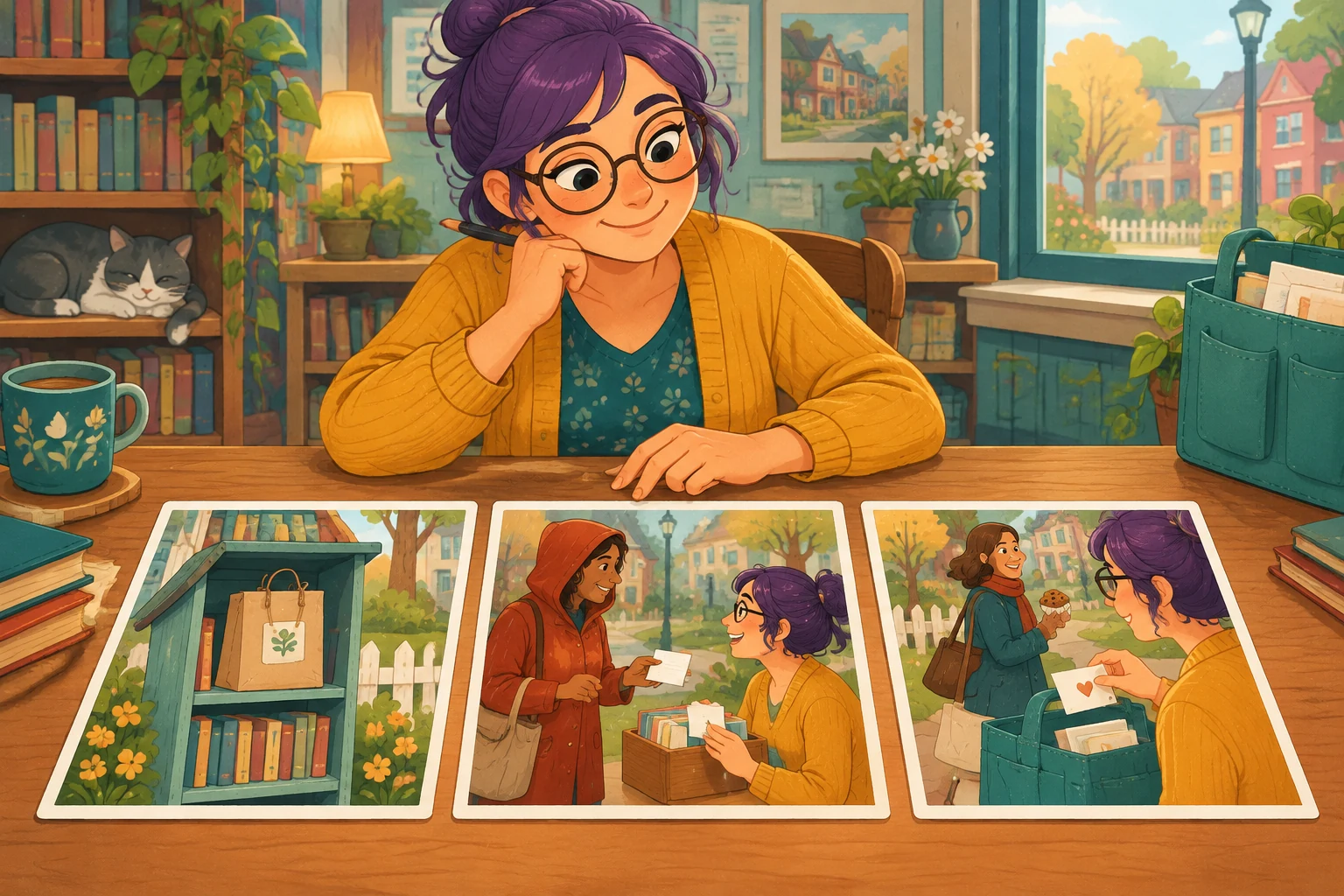
Use the same small, repeatable assignment for either assistant: Mara’s Missing Muffin, a gentle neighborhood misunderstanding outside a corner shop. Mara is an original character: a short, purple-haired volunteer librarian with round glasses, a mustard cardigan, a teal canvas tote, and a habit of organizing everyday things. Her neighbor Eli is tall, soft-spoken, and wears a rust-red raincoat. The recurring prop is one blueberry muffin in a folded paper bag. The humor comes from polite over-organization, not from humiliating either character.
Keep the three beats fixed:
- Setup: Mara labels the muffin bag “COMMUNITY SNACK” and places it on a small outdoor book-exchange shelf.
- Escalation: Eli returns a book and carefully leaves a thank-you note beside the bag. Mara mistakes the note for a sign-up request and adds a numbered queue card.
- Payoff: A third neighbor takes the muffin, leaving a neat “Thank you!” note. Mara proudly files the note in her library tote; Eli points out that the queue is now for one empty bag.
The joke is a tiny social mix-up that resolves warmly. There is no need to imitate a television show, familiar character, signature catchphrase, or recognizable costume. Make the characters yours by specifying their silhouettes, colors, expressions, and behavior.
A reusable prompt brief
Paste this brief into either assistant, then request a written production plan—not finished images:
Plan an original, three-panel neighborhood-comedy illustration titled “Mara’s Missing Muffin.” Use the exact setup, escalation, and payoff described above. Preserve Mara’s purple bob, round glasses, mustard cardigan, and teal tote in all three panels; preserve Eli’s rust-red raincoat. Keep the paper muffin bag and book-exchange shelf recognizable and in consistent positions where visible. Use a warm, readable neighborhood setting and clear expressions. The humor should come from Mara’s excessive organization and resolve kindly. Do not imitate any existing television character, show, catchphrase, or distinctive design. Return: (1) a panel-by-panel action and expression plan, (2) a continuity checklist, and (3) any ambiguity you would ask the artist to resolve. Do not claim to create images.
This gives the assistant a bounded writing task: organize the action, identify continuity risks, and flag missing choices. Terra is positioned for visual reasoning, clear writing, and bounded computer-use tasks; Sol is positioned for complex coding, computer use, and professional workflows. Those stated positions can inform which one you try, but they do not establish which will produce a better plan for this particular scene. See the official Terra page and official Sol page.
Proposed scorecard: pass or revise
This is a proposed evaluation, not an actual test or measured model comparison. Run both assistants with the same brief and settings if you want a fair personal comparison; OpenAI’s model-selection guidance likewise recommends comparing representative work on the same inputs and settings.
| Check | Pass if… | Fail if… |
|---|---|---|
| Three-beat structure | The plan clearly separates setup, escalation, and payoff in the stated order. | A beat is missing, swapped, or replaced with a different joke. |
| Character continuity | Mara retains all four specified design anchors; Eli retains the rust-red coat. | A defining color, garment, or silhouette changes without a requested reason. |
| Prop continuity | The same muffin bag, note, queue card, shelf, and tote perform the described actions. | A prop vanishes, duplicates, or changes identity in a way that breaks the gag. |
| Readable acting | Each panel names an observable pose or expression that helps communicate the misunderstanding. | The humor depends on an unexplained thought or unclear facial reaction. |
| Kind payoff | The neighbor takes the muffin, leaves thanks, and the joke ends without making anyone a target. | The ending turns mean, introduces a new conflict, or loses the empty-bag punchline. |
| Originality boundary | The plan follows only the supplied original character details and avoids borrowed show references. | It proposes an identifiable existing character, catchphrase, or signature design. |
| Useful handoff | The response includes a continuity checklist and flags genuine open decisions. | It claims to have rendered artwork or gives only generic praise. |
A response that fails a continuity check may still be useful as a draft: point to the exact failed row and request a revision, such as “Keep Mara’s teal tote present in panel three; change no other beat.” That makes the assistant’s role concrete and keeps you in control of the art direction.
Compare costs without confusing them with credits
The official pages list these standard text-token rates per million USD:
| Model | Input | Cached input | Output |
|---|---|---|---|
| GPT-6.1 Terra | $1 | $0.05 | $5 |
| GPT-6.1 Sol | $2 | $0.10 | $10 |
For a simple equal-token illustration, 100,000 uncached input tokens and 10,000 output tokens would cost $0.15 with Terra ($0.10 input + $0.05 output) or $0.30 with Sol ($0.20 input + $0.10 output), using those standard rates. This arithmetic example is not a quote for your prompt, a measured run, or a credit estimate for this site. Cache writes, tools, modes, and long prompts can change bills; equal token counts do not guarantee equal task cost. See the official Terra and Sol pages for model and pricing details. No benchmark or latency results were independently measured for this article.
From written plan to artwork
Treat either model as an external planning assistant. API availability does not mean that either text model is available inside southparkcharacter.com. This site offers AI image tools and AI video tools; those are separate destinations, not proof that they use Terra or Sol. Check the pricing page for this site’s own offerings, and browse the character-art blog for more creative guidance.
Decision rule: Try Terra first if your priority is a clear visual brief and bounded planning task; try Sol if your workflow centers on complex coding or computer use. These are positioning-based starting points, not a quality verdict. Apply the same prompt and scorecard to whichever option you can access, then revise any failed row. Next step: copy the reusable brief, choose your panel layout, and resolve the scorecard’s open questions before drawing.