
사우스 파크 캐릭터: 캐릭터 제작자를 위한 시각 가이드
12개의 일러스트 프로필, 알아보기 쉬운 의상, 카트먼, 그리고 오리지널 만화 캐릭터를 만드는 실용적인 아이디어를 통해 사우스 파크 캐릭터를 살펴보세요.
이 페이지의 새로운 내용
- — 글이 게시되었습니다.

The quickest way to recognize South Park characters is to look at their outlines, hats, and large blocks of color. Stan has a blue hat with red trim; Kyle wears a green earflap hat; Kenny disappears into an orange hood; Cartman's red jacket sits beneath a turquoise-and-yellow cap. Their faces share a simple visual language, but their silhouettes make them easy to tell apart. For an original character of your own, try South Park Character Creator.
This illustrated guide uses character images collected from the South Park Public Library to explain those differences. It is a fan reference for identification and creative study. If you are looking for a South Park character creator, these observations can also help you describe an original cartoon character more clearly.
Meet the four central boys
Eric Cartman
Cartman's broad red jacket and rounded outline distinguish him from the other boys before you notice his face. The yellow trim and pom-pom connect his hat to his mittens. When comparing characters, look at the width of the body as well as the colors: a red coat alone does not identify Cartman.
Stan Marsh
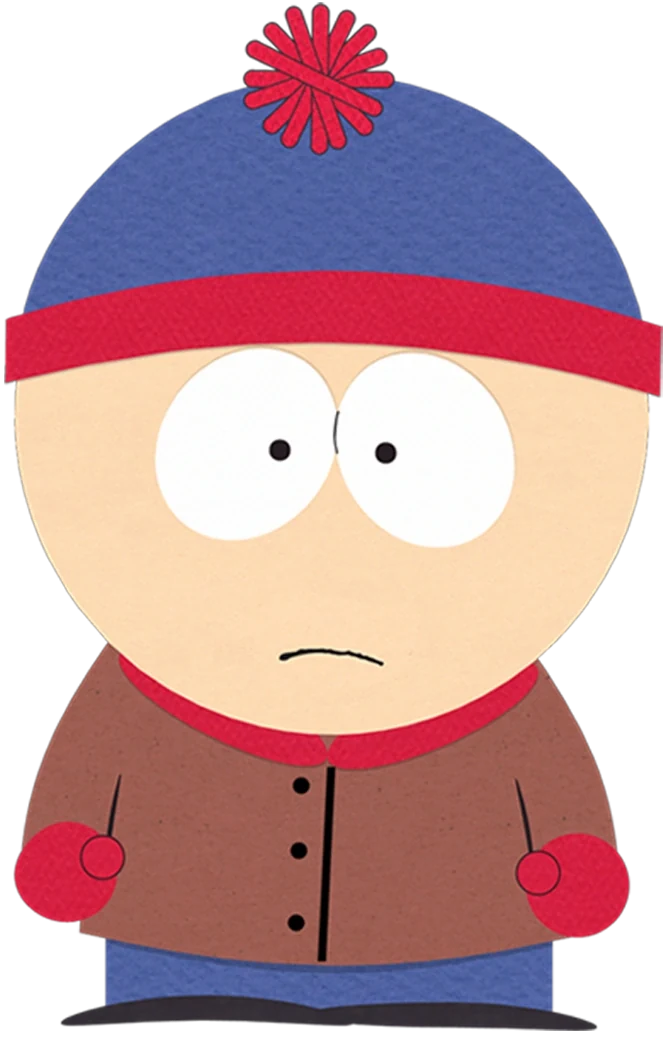
Stan's blue hat has a red band and pom-pom, echoed by his red gloves. His brown jacket provides a quieter middle section. Compared with Cartman, the body is narrower and the clothing less visually dominant. The hat is usually the clearest identifying feature in a small portrait.
Kyle Broflovski
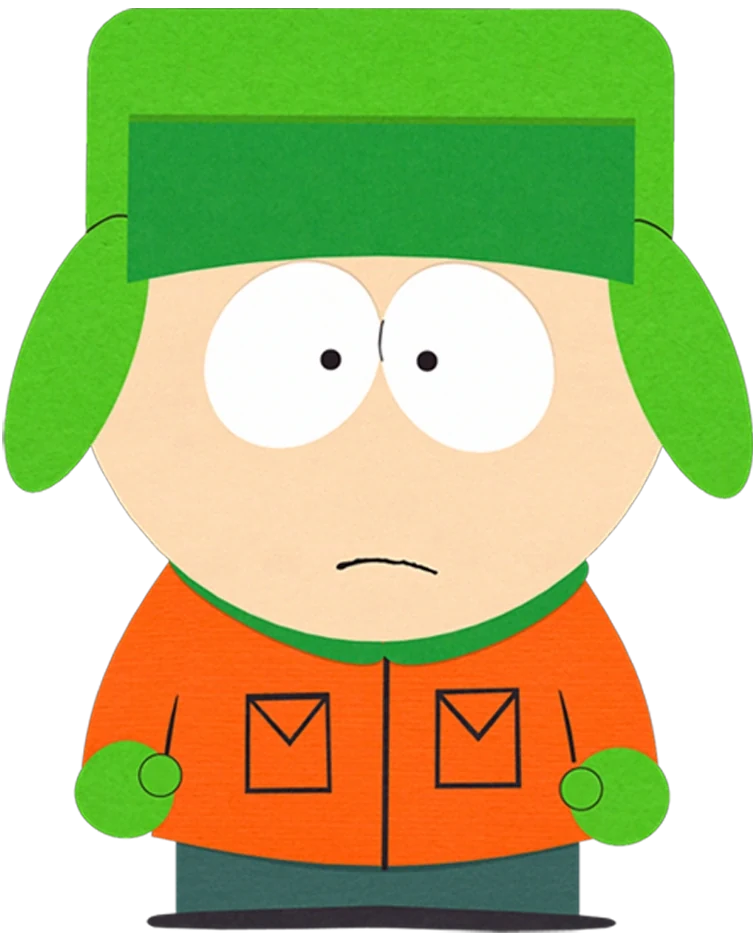
Kyle combines a boxy green hat with an orange jacket. The hanging earflaps widen the head's outline, giving him a different shape from Stan even when both faces are drawn with the same basic eyes. The jacket's pockets add a few useful details without overwhelming the design.
Kenny McCormick
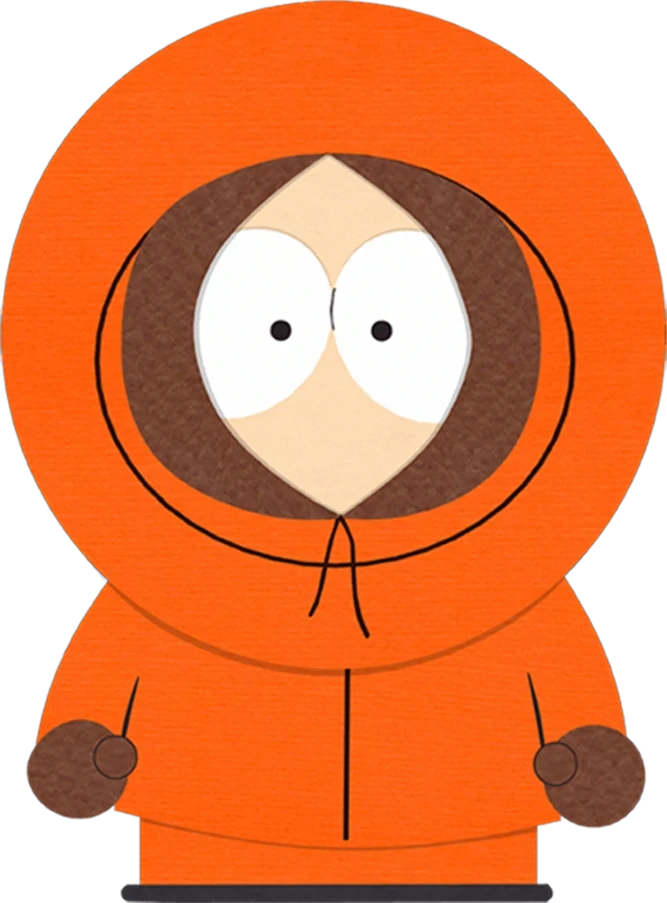
Kenny's orange hood frames a small visible area of his face. Its dark inner opening matters as much as the outer color. In a character reference, keep the hood opening, eyes, drawstrings, and brown gloves visible; cropping too closely can remove the features that make the design recognizable.
Friends with different visual signatures
Butters Stotch
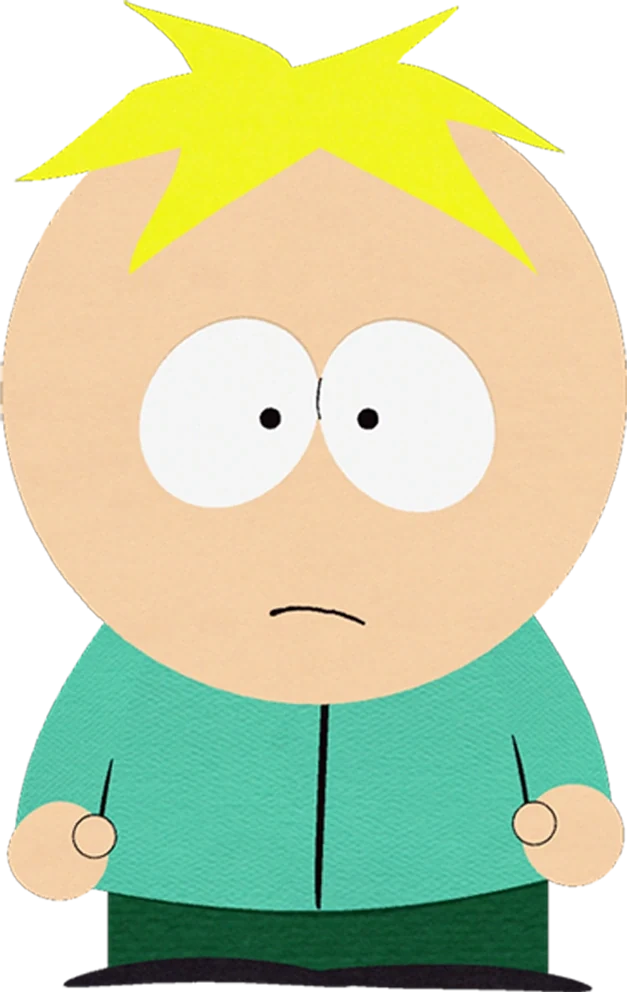
Butters wears a pale turquoise top beneath a small burst of blond hair. The uncovered head makes a useful contrast with the four boys' winter clothing. His design shows how a few points in a hairstyle can do the recognition work that a hat does elsewhere.
Wendy Testaburger
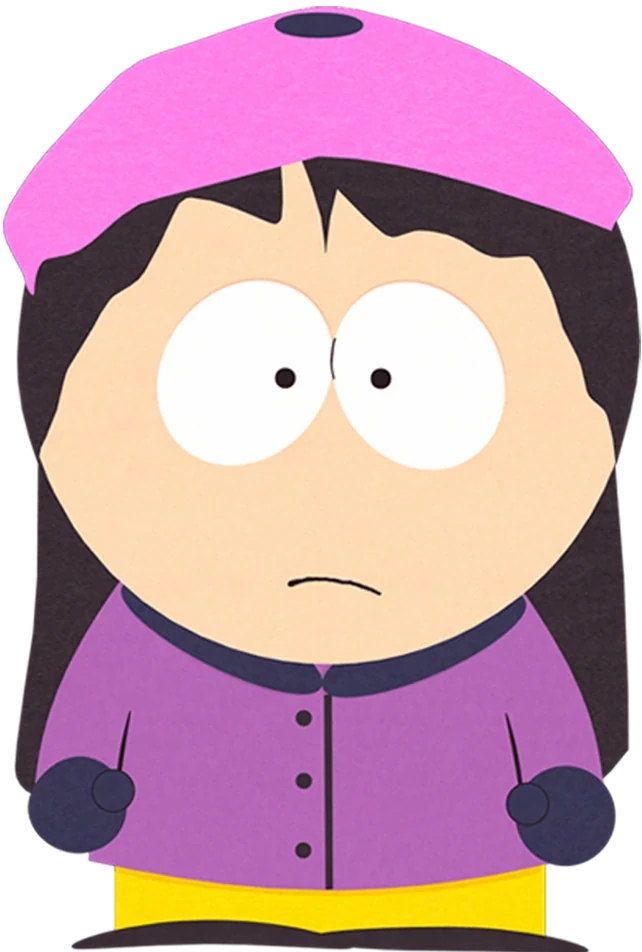
Wendy's pink beret, dark hair, and purple jacket create three clearly separated areas. Her hair extends beyond the coat, adding a longer silhouette than the boys' compact outlines. Notice the beret's soft shape: turning it into a pointed winter hat changes a defining part of her appearance.
Craig Tucker
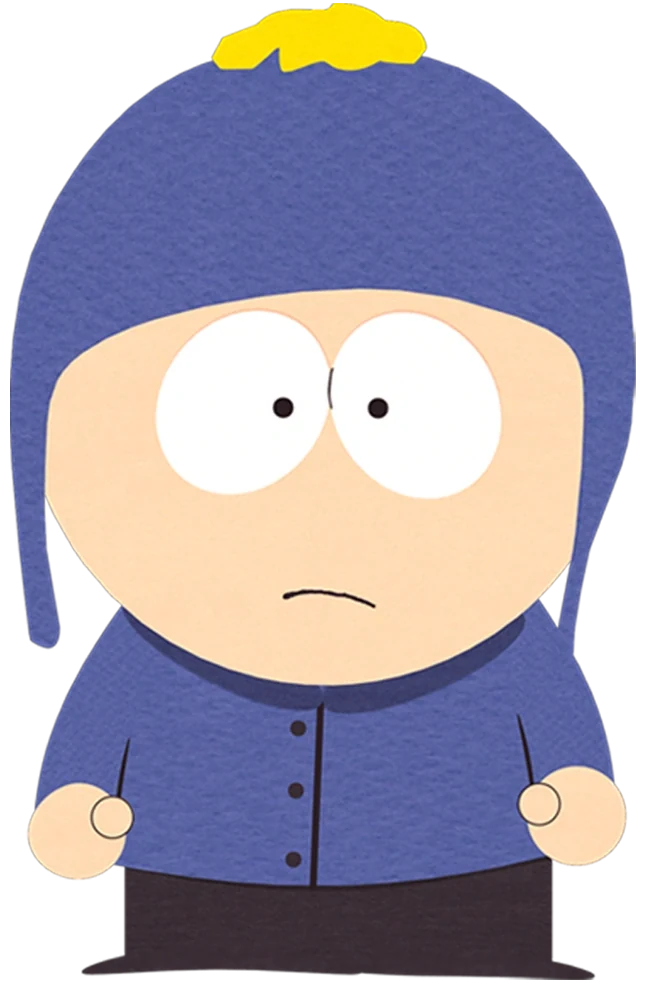
Craig's blue hat and jacket make a largely single-color design, broken by a yellow pom-pom. His hat also has earflaps, so a description that only says “boy wearing an earflap hat” could confuse him with Kyle. Name the color and the complete outfit when identifying either character.
Tweek Tweak
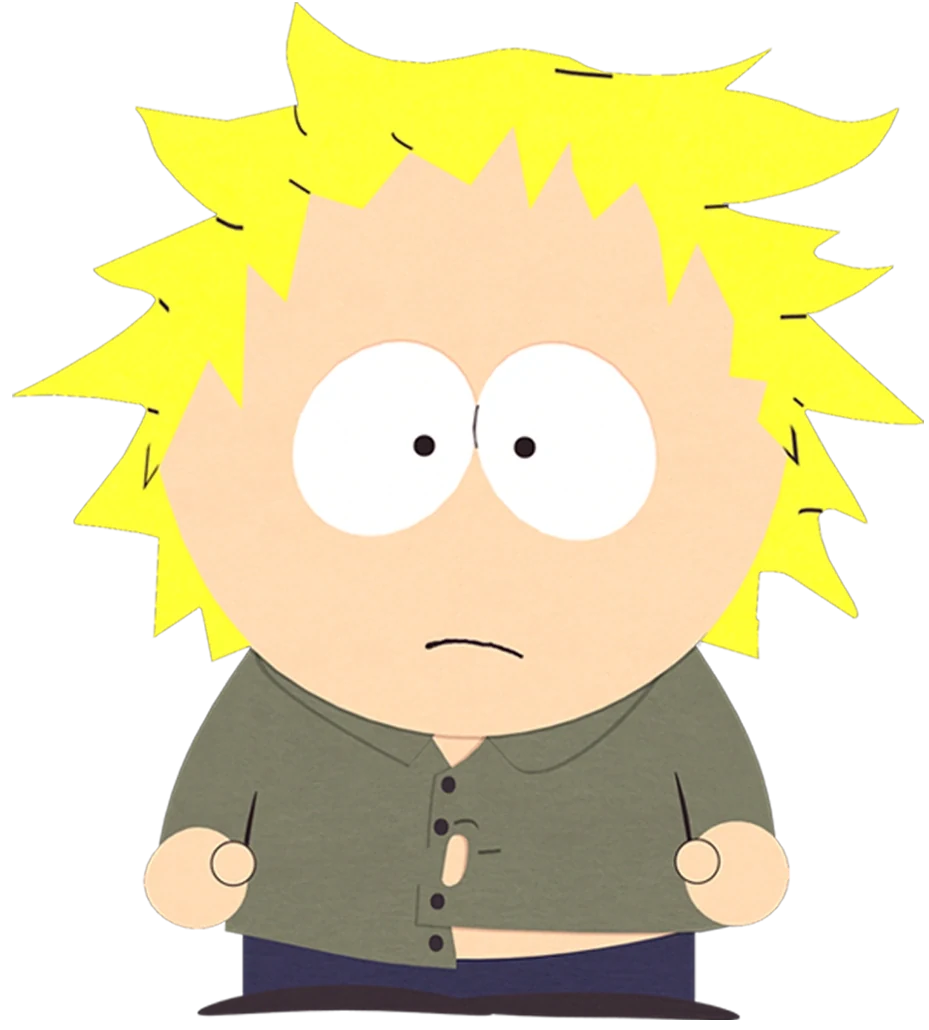
Tweek's uneven blond hair and loosely arranged shirt create a more irregular outline than Craig's. The contrast is useful for understanding character design: similar face shapes can feel very different when one has a tidy hat and the other has hair pointing in several directions.
Tolkien Black
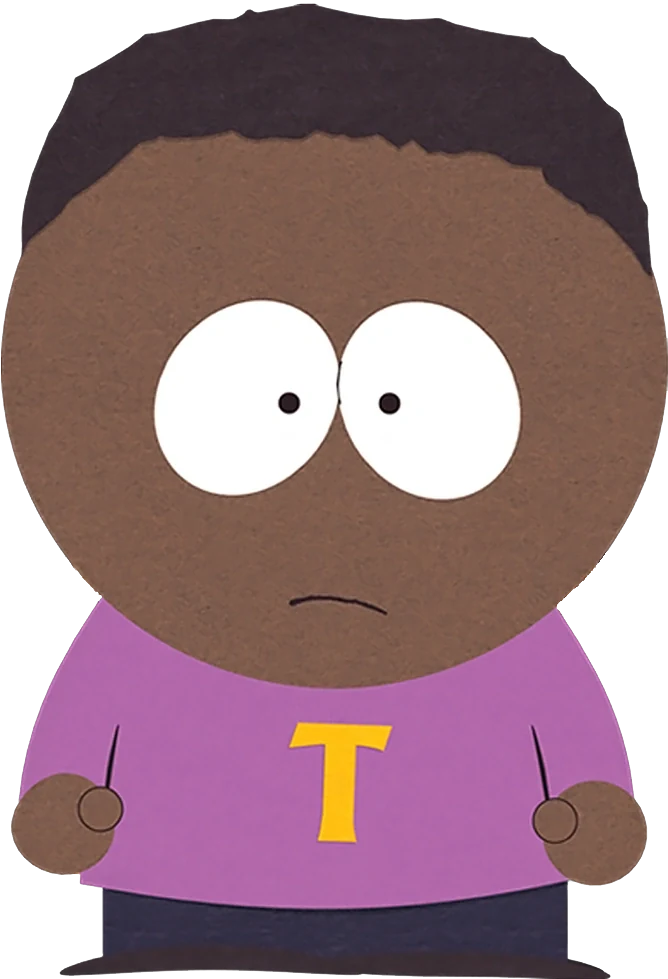
Tolkien's purple shirt carries a yellow T. The letter is a small accent, while his dark hair forms a broad shape above the face. In a thumbnail, the shirt color may survive more clearly than the lettering, so both belong in a written identification note.
Jimmy Valmer

Jimmy is shown in a yellow top with his crutches visible on both sides. Those supports extend the overall silhouette. A full-body reference should include them rather than cropping at the shoulders; an accurate description names his appearance without reducing the character to one physical detail.
Timmy Burch
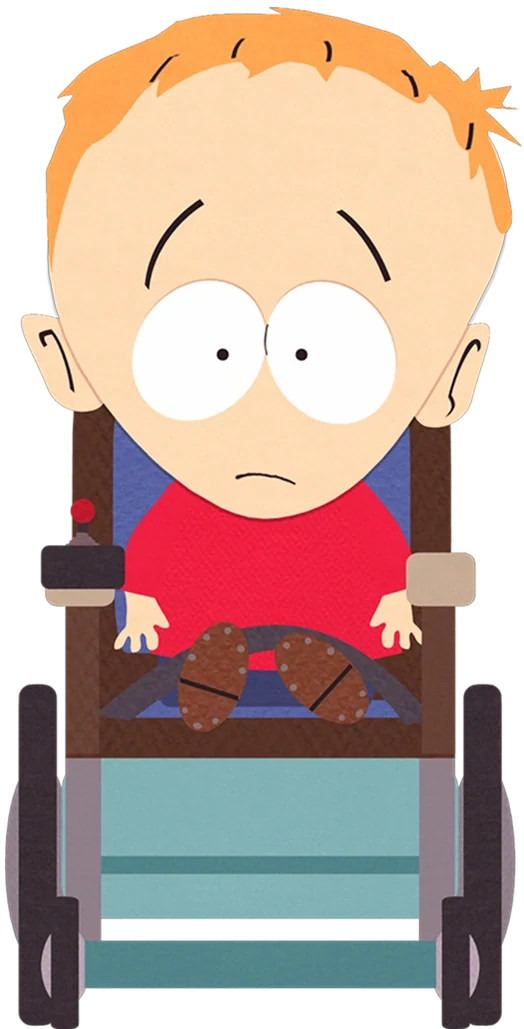
Timmy's red shirt sits within the larger outline of his wheelchair. The image includes the wheels, foot area, and handles, making it more informative than a face crop. Keep those relationships intact when explaining the picture: they show how the character is positioned, not just what he wears.
Randy Marsh
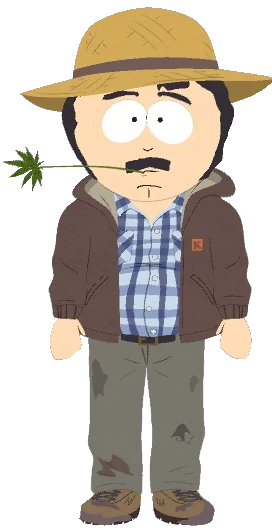
Randy appears here in a farmer outfit, with a brimmed hat, plaid shirt, and dark outer layer. His mustache remains an identifying feature, but this is a particular costume reference. A useful character library labels outfit variations instead of treating every image as the character's standard clothing.
Use a South Park character maker with a clear brief
A good brief separates the character's identity from the drawing style. For an original character, decide who they are before describing a coat: perhaps a reserved student who repairs bicycles, or a cheerful librarian with an oversized scarf. Choose one distinctive accessory and a restrained palette. That gives a South Park character maker something more specific to work with than “make a funny character.”
Describe the visual construction next: a flat cutout appearance, simple round eyes, compact proportions, and a front-facing pose. Specify which details must remain legible. If the result introduces shading, complex fingers, or a realistic background, simplify the brief rather than adding more adjectives. An initial image should establish the person; later variations can change expression or setting.
A sample brief: “An original small-town cartoon librarian, navy scarf, rust-colored coat, short silver hair, holding one closed book; simple flat shapes, round eyes, neutral front view, plain light background.” The occupation, colors, and prop form a coherent idea without borrowing an existing character's full outfit. You can explore a new brief from the homepage and return to the blog for other visual references. Choose a personality, outfit, and silhouette of your own when you try South Park Character Creator.
A quick identification exercise
Compare Kyle and Craig first. Both have earflap hats, but Kyle pairs green headwear with an orange jacket, while Craig uses blue for both. Next, compare Cartman and Clyde. Their red jackets might suggest a match at first glance, yet Cartman has a cap and a much broader body; Clyde has uncovered brown hair and blue jacket trim. These pairs show why identification works better with two or three connected clues.
For a new character, try writing a similarly short identification line before composing a full prompt. “The student with the rust coat, silver hair, and navy scarf” is concrete enough to guide a visual decision. If you cannot summarize the person without borrowing an existing cast member's name, choose a more distinctive accessory or color relationship. Keep the role simple, too: one recognizable activity gives the character a reason to hold a prop and helps the design feel like a person rather than a collection of clothes.
Cartman and the World of Warcraft episode

The South Park World of Warcraft connection comes from Make Love, Not Warcraft, Season 10, Episode 8. Stan, Kyle, Cartman, and Kenny try to defeat a powerful player who keeps killing their game characters. Cartman organizes a plan to build up the group's strength, turning an ordinary gaming session into an increasingly obsessive shared project.
In the computer-lab image, the boys' appearances have changed, yet their usual clothing still helps identify them. Kyle keeps the green hat, Kenny remains inside the orange hood, Stan has blue-and-red headwear, and Cartman's red jacket marks his place in the group. This is an episode image, whereas the earlier pictures are character portraits.
사우스 파크 제작자 참고 자료로는 정체성과 맥락을 모두 기록하세요. 친숙한 캐릭터, 에피소드에서 변형된 모습, 게임 내 아바타는 모두 같은 이야기에 속할 수 있지만 서로 대체 가능한 시각적 대상은 아닙니다. 나만의 독창적인 캐릭터를 만들려면 사우스 파크 캐릭터 생성기 체험하기를 이용해 보세요.